Brightdaily.blog is a participant in the Amazon Services LLC Associates Program and receives commissions from qualifying purchases made through links to Amazon and its affiliated websites.
Brightdaily.blog is a participant in the Amazon Services LLC Associates Program and receives commissions from qualifying purchases made through links to Amazon and its affiliated websites.
As PC gaming demands higher visual fidelity, advanced ray-tracing pipelines, and AI-assisted rendering, system configuration balance has become paramount. Prebuilt desktop towers must cleanly synchronize high-throughput processing, graphic rendering capability, memory bandwidth, and thermal dissipation.
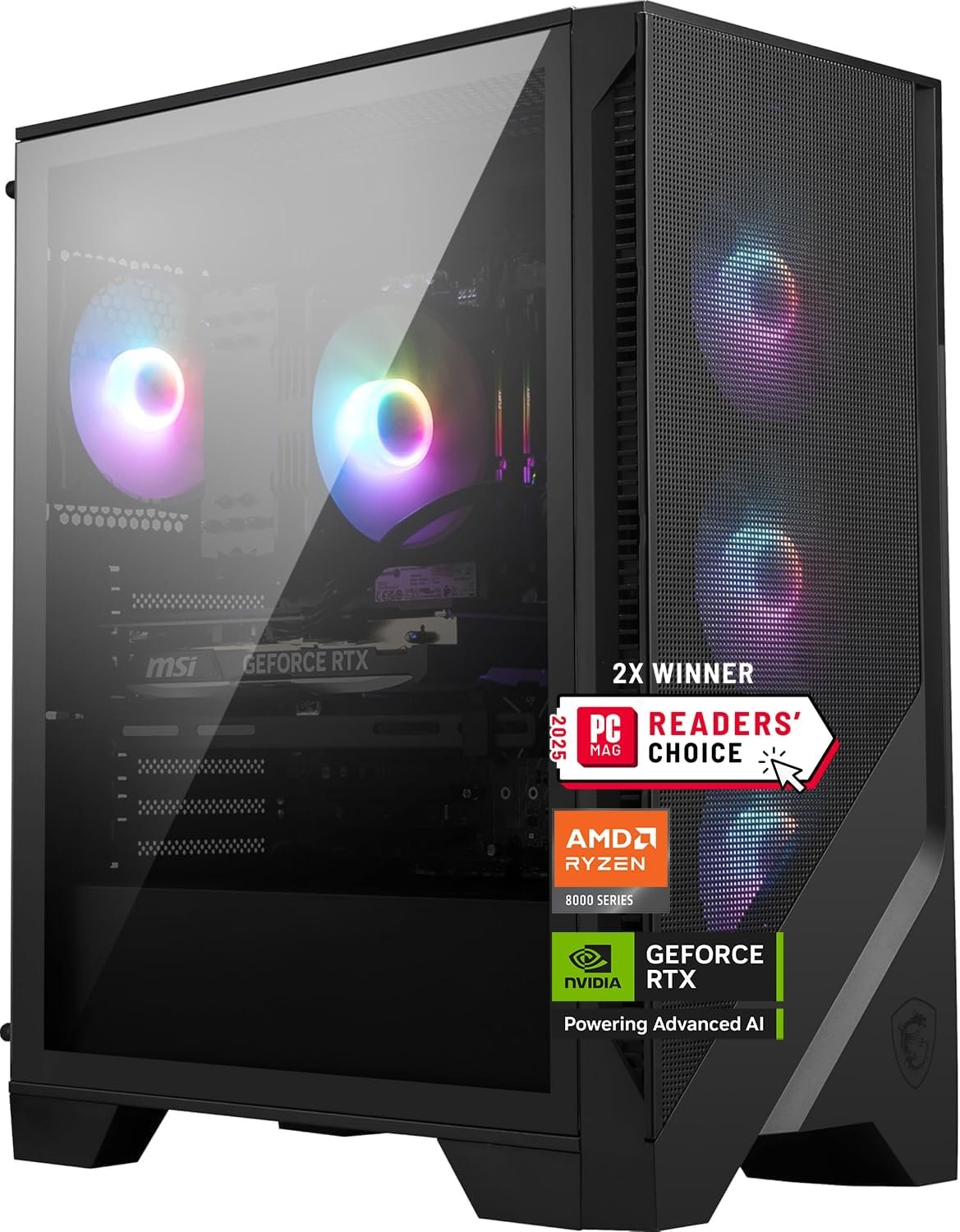
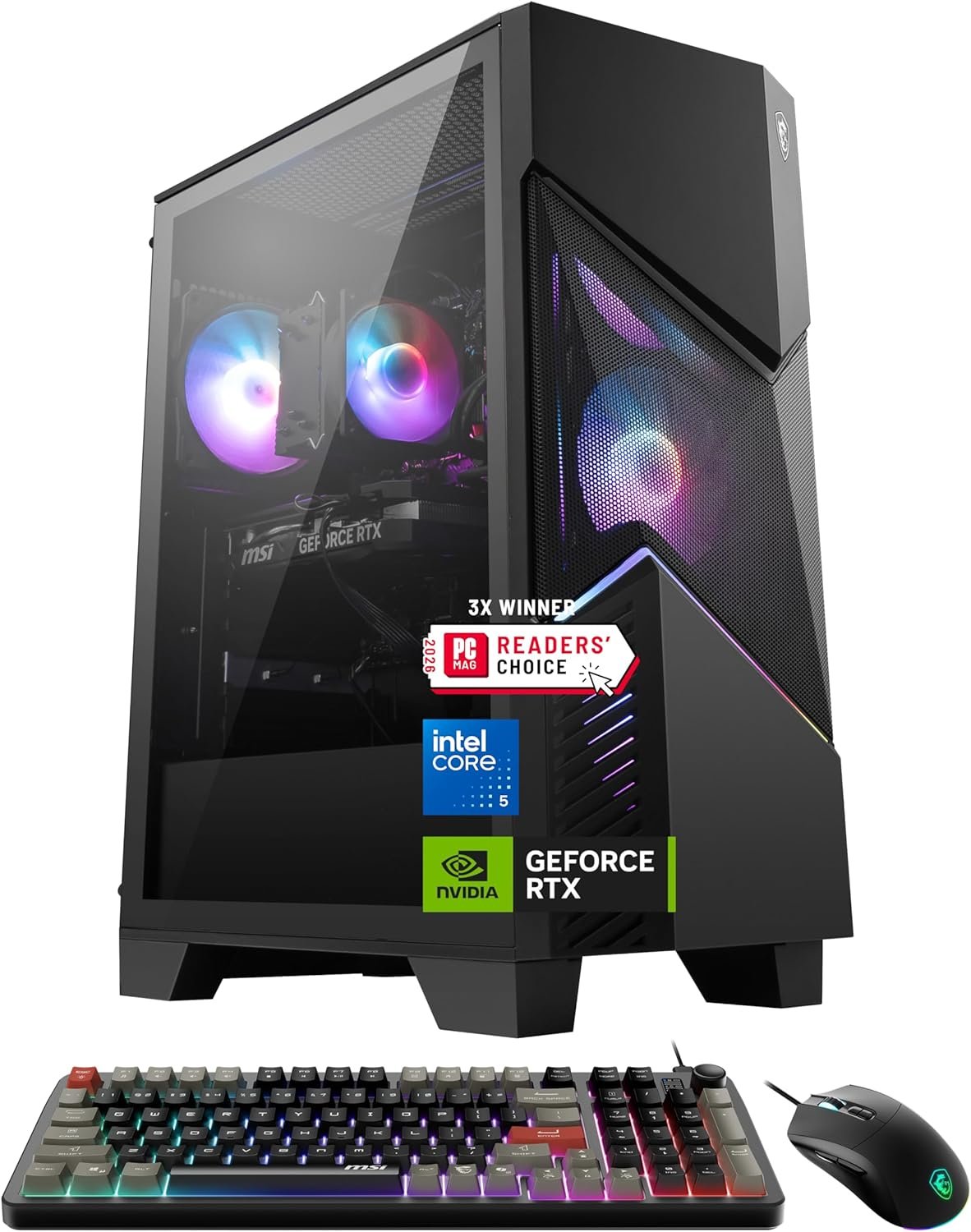
The MSI Codex Z2 (Model SKU: A8NVP-436US) is configured as a mid-to-high-tier turnkey desktop designed for high-refresh-rate 1440p gaming, entry-to-mid 4K rendering, virtual reality environments, and heavy multi-threaded productivity. Built around the AMD Ryzen 7 8700F processor and the NVIDIA GeForce RTX 5070 graphics architecture, this system integrates 32GB of DDR5 memory and a 2TB M.2 NVMe Solid State Drive within an accessible, standardized chassis.
This technical breakdown examines the architectural components, thermal mechanics, connectivity standards, real-world performance expectations, and platform upgradeability of the MSI Codex Z2 A8NVP-436US.
Core Component Architecture
Component
Technical Specification
Processor (CPU)
AMD Ryzen 7 8700F (8 Cores, 16 Threads, TSMC 4nm)
Graphics Card (GPU)
NVIDIA GeForce RTX 5070
System Memory
32GB DDR5 SDRAM
Primary Storage
2TB M.2 PCIe NVMe SSD
Chassis Platform
MSI Codex Z2 Mid-Tower
Front I/O
USB Type-C, USB 3.2 Gen 1 Type-A, Audio In/Out
Operating System
Windows 11 Home
VR Capability
Fully VR-Ready (Oculus/Meta, Valve, HTC)
Central Processing Unit: AMD Ryzen 7 8700F
At the core of the MSI Codex Z2 sits the AMD Ryzen 7 8700F. Built on AMD’s Zen 4 architecture using a TSMC 4nm FinFET manufacturing process, this chip delivers efficient instruction-per-clock (IPC) throughput alongside manageable thermal characteristics.
Core and Thread Count: The Ryzen 7 8700F features 8 physical cores and 16 processing threads. This core configuration offers optimal balance for modern gaming engines, which typically saturate 6 to 8 cores, while maintaining sufficient headroom for background tasking, streaming encoding, and system utilities.
Frequency & Clock Behavior: Operating with base clock speeds near 4.1 GHz and boost clocks reaching up to 5.0 GHz, the 8700F handles heavy single-threaded rendering workloads without excessive latency or frequency throttling.
The “F” Suffix Significance: The “F” designation indicates that this processor operates without integrated graphics (iGPU). All display output is routed directly through the dedicated NVIDIA GeForce RTX 5070 GPU, eliminating redundant hardware overhead on the CPU die.
Neural Processing Unit (NPU): Built upon AMD’s Phoenix/Hawk Point silicon heritage, the Ryzen 7 8700F incorporates a dedicated Ryzen AI NPU. This hardware block accelerates local AI background tasks, background blur functions, audio noise suppression, and machine-learning operations without taxing the main CPU core clusters or discrete GPU pipelines.
Graphics Processing Unit: NVIDIA GeForce RTX 5070
The visual performance engine of the MSI Codex Z2 is the NVIDIA GeForce RTX 5070. Operating on NVIDIA’s next-generation Blackwell architecture, this discrete graphics card is built for real-time ray tracing, high-frame-rate rendering, and AI-driven image reconstruction.
Key Technological Features
Ray Tracing Hardware: Dedicated RT Cores handle spatial BVH (Bounding Volume Hierarchy) calculations, accelerating reflection, refraction, path tracing, and global illumination effects in demanding engines like Unreal Engine 5.
Tensor Cores & Deep Learning Super Sampling (DLSS): The RTX 5070 utilizes hardware Tensor Cores to run DLSS (Deep Learning Super Sampling) pipelines. By rendering games at a lower native resolution and using AI models to reconstruct frames at target resolutions (e.g., 1440p or 4K), frame rates are increased while image clarity is preserved.
Optical Multi Frame Generation: Advanced frame generation algorithms construct additional intermediate frames directly on the GPU, assisting high-refresh displays in complex scene rendering.
NVENC Media Encoder: Includes NVIDIA’s hardware media encoder, providing AV1, H.264, and HEVC hardware encoding support. This allows content creators and streamers to record or broadcast high-bitrate video without performance penalties on game frame times.
System Memory & High-Speed Storage
Hardware bottlenecks in desktop systems frequently occur not at the GPU level, but within memory bandwidth or drive access speed limitations. The MSI Codex Z2 addresses both vectors with modern DDR5 and PCIe NVMe implementations.
32GB DDR5 SDRAM
The inclusion of 32GB DDR5 memory provides twice the capacity of baseline 16GB configurations, providing future-proof headroom for modern gaming titles that frequently consume over 12GB to 16GB of system RAM on high texture settings.
High Bandwidth: DDR5 operates at significantly higher clock rates and transfer speeds compared to previous-generation DDR4 memory, expanding data bus capacity between the system memory and the Ryzen 7 CPU.
Sub-channel Architecture: DDR5 features two independent 32-bit subchannels per module, improving memory access efficiency, reducing command-latency penalties, and assisting high-frame-rate stability (specifically 1% and 0.1% low frametimes).
Multitasking Headroom: 32GB enables seamless parallel execution of resource-heavy applications—such as hosting a high-tick-rate dedicated game server, streaming via OBS Studio, and running active browser tabs simultaneously without paging to disk storage.
2TB M.2 PCIe NVMe Solid State Drive
Storage performance directly governs operating system responsiveness, game asset streaming, and level load times.
Capacity: A 2TB SSD provides sufficient non-volatile storage space for Windows 11 Home, software applications, and a large library of modern AAA gaming titles, which regularly exceed 100GB to 150GB per installation.
DirectStorage Protocol: The NVMe interface leverages high sequential read speeds and low random access latency. Under Microsoft’s DirectStorage API, game engines can bypass CPU processing routes to stream compressed textures directly from the M.2 SSD to GPU VRAM, minimizing in-game pop-in and loading screens.
Thermal Management and Chassis Design
Sustained clock speeds across the CPU and GPU rely heavily on internal thermal dynamics. The MSI Codex Z2 chassis uses a standardized airflow configuration engineered to manage internal ambient temperatures under prolonged gaming loads.
       [ Internal Airflow & Thermal Mechanics ]

         Front Mesh Panel (Fresh Air Intake)
                 ├──> [ Fan 1 Intake ] ──┐
                 ├──> [ Fan 2 Intake ] ──┼──> Internal Components
                 └──> [ Fan 3 Intake ] ──┘     (CPU Cooler & GPU)
                                                      │
                                                      ▼
         Rear Exhaust <── [ Exhaust Fan ] <── Heated Air Discharge
Thermal Layout & Airflow Dynamics
Airflow Mesh Front Panel: The front chassis facade utilizes an open-mesh ventilation array, allowing intake fans to draw fresh ambient air directly into the system interior without restricting static pressure.
Positive Pressure Configuration: Arranging intake fans at the front panel creates positive internal static pressure. This pushes air through internal component heatsinks and forces warm air out through top and rear exhaust vents, while minimizing dust accumulation at unsealed chassis seams.
CPU Cooling Assembly: The Ryzen 7 8700F is cooled via an efficient air cooler or liquid radiator solution tailored to its 65W–88W thermal design power (TDP) envelope, keeping operating temperatures within optimal Zen 4 silicon boost parameters.
GPU Thermal Isolation: The RTX 5070 features an independent axial dual/triple fan assembly that exhausts heat within the main chamber, where rear and top exhaust fans pull warm air out of the case.
Input/Output (I/O) & Connectivity Integration
Modern gaming setups require extensive peripheral connectivity for high-polling-rate mice, low-latency mechanical keyboards, high-resolution webcams, audio interfaces, and external storage drives.
       [ MSI Codex Z2 I/O Configuration ]
  ┌──────────────────────────────────────────────┐
  │ FRONT PANEL I/O                              │
  │  • 1x USB Type-C High-Speed Port             │
  │  • USB 3.2 Gen 1 Type-A Ports                │
  │  • 3.5mm Headphone & Microphone Jacks        │
  ├──────────────────────────────────────────────┤
  │ REAR PANEL I/O                               │
  │  • Motherboard USB Ports & RJ-45 Ethernet    │
  │  • Audio Jacks (Line In, Line Out, Mic In)   │
  │  • GPU Video Outputs: DisplayPort 2.1 & HDMI │
  └──────────────────────────────────────────────┘
Front Panel Connectivity
USB Type-C Port: Located at the front top panel, this port allows high-speed connection to modern external SSDs, VR headsets, mobile devices, and high-performance peripherals without accessing the rear of the tower.
USB Type-A & Audio Ports: Standard USB 3.2 Gen 1 Type-A ports accommodate external flash drives and game controllers, while dedicated 3.5mm jacks provide analog headset and microphone connectivity.
Graphics & Display Outputs
DisplayPort 2.1 Outputs: High-bandwidth DisplayPort connectivity supports multi-monitor configurations, high-refresh-rate 1440p displays (240Hz+), and 4K displays with variable refresh rate (VRR) technologies like NVIDIA G-SYNC.
HDMI 2.1: Native HDMI output allows connection to modern 4K OLED televisions and high-bandwidth displays, supporting 4K resolutions at high refresh rates with HDR and uncompressed audio passthrough.
Networking Infrastructure
RJ-45 Gigabit/2.5G Ethernet: Direct wire connection via the onboard LAN controller ensures minimal latency and packet loss during competitive online play.
Wi-Fi & Bluetooth Integration: Onboard Wi-Fi (Wi-Fi 6E/7 standard dependent on motherboard iteration) provides high-bandwidth wireless network connectivity across 2.4GHz, 5GHz, and 6GHz bands, alongside Bluetooth support for wireless gamepads, headphones, and peripherals.
Virtual Reality (VR) Capabilities
The MSI Codex Z2 carries an explicit VR-Ready qualification, meeting and exceeding the hardware standards required by current virtual reality platforms such as the Meta Quest 3 (via Quest Link/AirLink), Valve Index, HTC Vive Focus 3, and Windows Mixed Reality platforms.
VR Performance Factors: Virtual reality headsets require rendering two distinct, high-resolution images simultaneously (one per eye) at high frame rates (90Hz, 120Hz, or higher) to prevent motion sickness and maintain visual realism.
GPU Rendering Margin: The RTX 5070 possesses the shader execution horsepower and spatial rasterization performance needed to render complex 3D VR environments above 90 FPS per eye.
Bandwidth & Encoder Performance: The front USB Type-C port and high-throughput AV1/NVENC encoders allow low-latency wired and wireless tethering to standalone VR headsets.
32GB System RAM Cushion: VR simulators (e.g., Digital Combat Simulator, MS Flight Simulator, Assetto Corsa with graphical modifications) frequently exceed 16GB of system memory usage. The 32GB DDR5 configuration ensures sustained frame pacing in these applications.
Operating System & Software Integration
The system comes pre-installed with Windows 11 Home, fully configured with updated driver architectures for AMD Zen 4 platform chips and NVIDIA Blackwell graphics hardware.
Key Windows 11 Gaming Features
DirectStorage Integration: Optimizes NVMe SSD data delivery directly to GPU memory, bypassing CPU processing layers.
Auto HDR: Automatically upgrades standard dynamic range (SDR) legacy games to High Dynamic Range (HDR) visuals on compatible monitors.
Advanced Thread Scheduling: Optimizes background processing priorities across the 16 threads of the Ryzen 7 8700F.
MSI Center Software Ecosystem
The system integrates with the MSI Center software suite, enabling hardware management through a unified interface:
System Monitoring: Live telemetry tracking of CPU/GPU core temperatures, fan speeds, clock frequencies, and memory utilization.
User Scenarios: One-click switching between Extreme Performance, Balanced, and Silent fan curves and power profiles.
Mystic Light: RGB lighting customization across internal chassis components and compatible external peripherals.
Real-World Performance Expectations
1. 1440p (2560×1440) Ultra Gaming
The MSI Codex Z2 configuration is optimized for native 1440p gaming. Modern AAA titles operate comfortably at high visual presets:
Graphically Intensive AAA Titles (Cyberpunk 2077, Starfield, Black Myth: Wukong): Native rendering frame rates consistently exceed 80–110 FPS at Ultra settings, with DLSS and frame generation pushing performance beyond 140+ FPS with Ray Tracing enabled.
2. 4K Ultra HD (3840×2160) Gaming
Utilizing DLSS Super Resolution set to Quality or Balanced mode, the RTX 5070 maintains frame rates above 60 FPS in modern AAA titles at 4K resolution, making this tower a capable entry-to-mid 4K gaming machine.
3. Content Creation & Workstation Workloads
Video Editing (Adobe Premiere Pro / DaVinci Resolve): 4K timeline scrub performance remains fluid due to the combination of 32GB DDR5 RAM, 8-core CPU processing power, and NVENC hardware video acceleration.
3D Rendering (Blender / Unreal Engine 5): CUDA and OptiX acceleration on the RTX 5070 allow fast viewport rendering and reduced bake/export times.
Upgradeability and Platform Longevity
Unlike proprietary prebuilt desktop systems that use non-standard form factors, the MSI Codex Z2 uses standardized PC components housed within an ATX/Micro-ATX environment.
       [ Component Upgrade Path Matrix ]
  ┌───────────────────┬──────────────────────────────────────────────┐
  │ Component         │ Upgrade Capability & Flexibility             │
  ├───────────────────┼──────────────────────────────────────────────┤
  │ CPU Socket        │ AMD Socket AM5 (Future Ryzen Support)        │
  ├───────────────────┼──────────────────────────────────────────────┤
  │ RAM Expansion     │ Standard DDR5 DIMM Slots (Up to 64GB/128GB)  │
  ├───────────────────┼──────────────────────────────────────────────┤
  │ Storage Expansion │ Additional M.2 NVMe slots & 2.5"/3.5" SATA   │
  ├───────────────────┼──────────────────────────────────────────────┤
  │ Power Supply      │ Standard ATX Power Supply Unit (PSU)         │
  └───────────────────┴──────────────────────────────────────────────┘
AMD Socket AM5 Platform: The Ryzen 7 8700F resides on AMD’s long-term AM5 socket platform. This allows future CPU upgrades to newer-generation Ryzen processors without requiring a full motherboard replacement.
Memory Expansion: standard DDR5 DIMM slots allow users to double memory capacity up to 64GB or 128GB as memory demands grow.
Storage Expansion: The motherboard includes additional secondary M.2 slots and traditional SATA power/data ports to accommodate additional SSD or HDD drives.
Standard ATX Power Supply: The system utilizes standard ATX power supplies, allowing simple replacement or upgrades to higher-wattage units if future high-draw components are installed.
Summary Configuration Matrix
For quick reference, the complete hardware and system specification profile of the MSI Codex Z2 A8NVP-436US is mapped below:
Feature Category
Implementation Details
System Model
MSI Codex Z2 (A8NVP-436US)
Processor
AMD Ryzen 7 8700F (8 Cores / 16 Threads, up to 5.0 GHz)
Graphics
NVIDIA GeForce RTX 5070 (Blackwell Architecture, DLSS / Ray Tracing)
RAM
32GB DDR5 System Memory
Storage
2TB M.2 PCIe NVMe SSD
Front I/O Ports
1x USB Type-C, USB 3.2 Gen 1 Type-A, 3.5mm Audio Jacks
Display Outputs
Multiple DisplayPort 2.1, 1x HDMI 2.1
Network
Ethernet LAN Port, Integrated Wi-Fi & Bluetooth
Operating System
Windows 11 Home (64-bit)
Primary Use Cases
1440p High-Refresh Gaming, 4K Gaming, VR, Streaming, 4K Video Editing
Technical Conclusion
The MSI Codex Z2 (A8NVP-436US) provides a balanced hardware combination designed to handle modern 1440p and 4K gaming workloads, content creation tasks, and Virtual Reality hardware platforms.
By combining the efficient 8-core/16-thread architecture of the AMD Ryzen 7 8700F with the ray-tracing and AI-rendering abilities of the NVIDIA GeForce RTX 5070, this desktop avoids major processing bottlenecks. The inclusion of 32GB DDR5 RAM and a high-capacity 2TB M.2 NVMe SSD ensures out-of-the-box readiness for modern game sizes and multitask workloads. Combined with standardized chassis dimensions and standard socket interfaces, it offers a prebuilt system that remains expandable for years to come.
 1
1