 11
11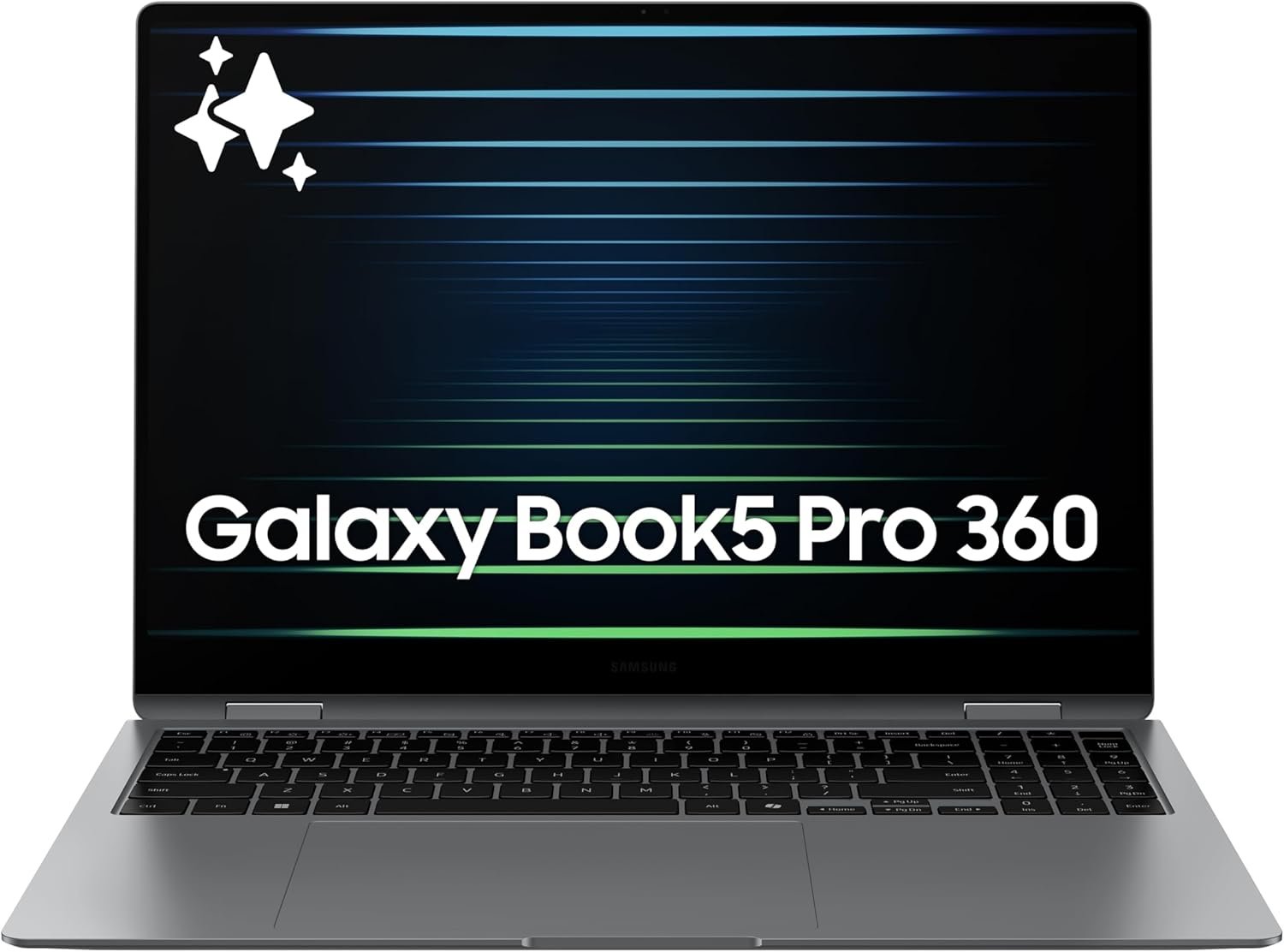
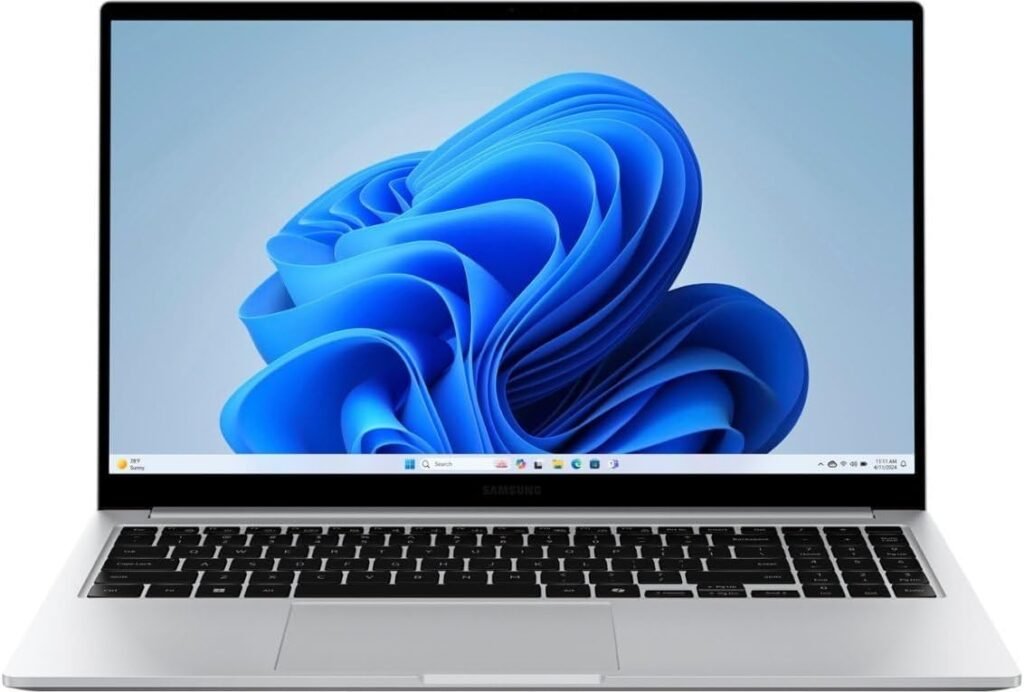
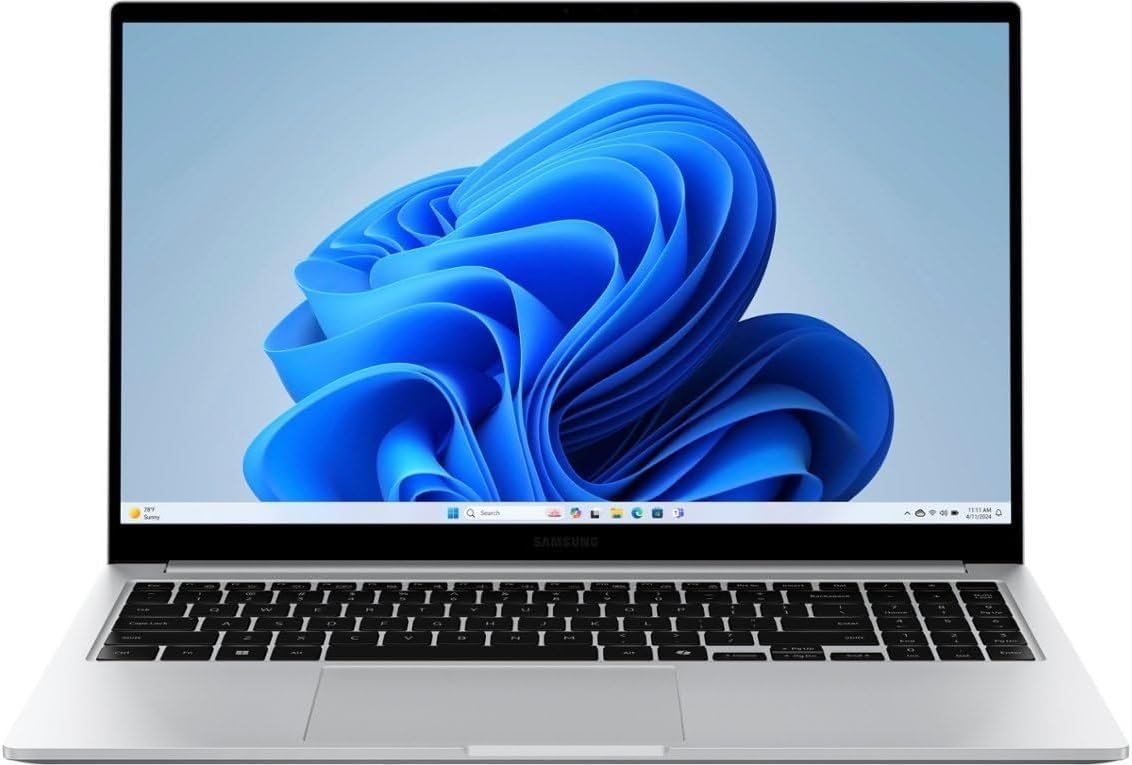
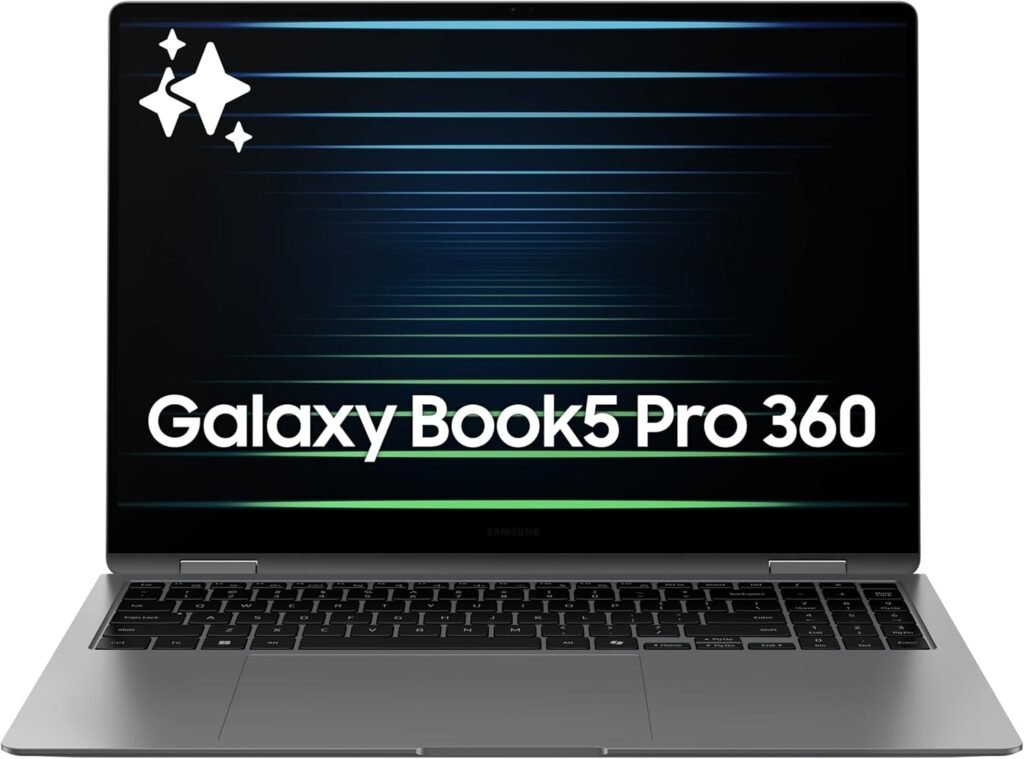
The laptop market has undergone a significant paradigm shift driven by the integration of dedicated artificial intelligence processing units, high-efficiency system-on-chip (SoC) architectures, and high-resolution display technologies. Among modern convertible 2-in-1 devices, the Samsung 16” Galaxy Book5 Pro 360 Copilot+ PC represents a full convergence of mobile compute efficiency, pen-based digital input, and high-density visual engineering.
Designed around Intel’s Lunar Lake architecture (Core Ultra 7 Series 2), this platform delivers hardware-accelerated AI execution alongside a 360-degree flexible hinge and a 3K Dynamic AMOLED 2X display.
The following breakdown outlines the complete hardware, thermal, and architectural specifications of the 16-inch Samsung Galaxy Book5 Pro 360 configuration:
| System Component | Technical Specification |
| Processor (CPU) | Intel Core Ultra 7 Processor (Series 2 / Lunar Lake, e.g., 256V / 258V) |
| Neural Processing Unit | Intel AI Boost NPU (Up to 47 TOPS compute throughput) |
| Integrated Graphics | Intel Arc 140V GPU (8GB shared memory allocation) |
| System Memory (RAM) | 16GB or 32GB LPDDR5X (On-Package Memory Architecture) |
| Primary Storage | 512GB / 1TB NVMe PCIe 4.0 Solid State Drive |
| Display Panel | 16.0-inch 3K Dynamic AMOLED 2X, 10-point Multi-Touch |
| Resolution & Aspect Ratio | 2880 x 1800 (WQXGA+), 16:10 aspect ratio |
| Refresh Rate & Color | Up to 120Hz Variable Refresh Rate (VRR), 120% DCI-P3 color volume |
| Stylus Support | Included passive S Pen (Electromagnetic Resonance Technology) |
| Audio Configuration | Quad-speaker system (Dual 5W Woofers + Dual 3.3W Tweeters, Dolby Atmos) |
| Wireless Connectivity | Wi-Fi 7 (802.11be 2×2), Bluetooth 5.4 |
| Physical I/O Ports | 2x Thunderbolt 4, 1x USB-A 3.2, 1x HDMI 2.1, MicroSD Reader, 3.5mm Combo |
| Battery & Charging | 76 Wh Lithium-Ion, 65W Type-C Super-Fast Charger |
| Chassis Dimensions | 355.4 mm x 252.2 mm x 12.8 mm (13.99″ x 9.85″ x 0.49″) |
| Total Mass | 1.69 kg (3.73 lbs) |
At the heart of the Galaxy Book5 Pro 360 is Intel’s Series 2 Core Ultra 7 processor (code-named Lunar Lake). This architecture abandons traditional multi-chip module topologies in favor of a highly integrated System-on-Chip (SoC) design built on advanced lithography nodes.
Lunar Lake restructures core resource management through two distinct execution core clusters:
By relocating memory modules directly onto the processor package (On-Package LPDDR5X RAM), signal trace lengths between compute units and system memory are dramatically minimized. This topology lowers system latency, decreases board area footprint, and yields significant energy savings during memory-bound operations.
+-----------------------------------------------------------------------+
|              Intel Core Ultra 7 Series 2 (Lunar Lake SoC)              |
|                                                                       |
|  +------------------------+  +-------------------+  +---------------+  |
|  | Lion Cove P-Core Array |  | Skymont E-Cores   |  | Intel Arc     |  |
|  | High Single-Thread IPC |  | Low-Power Island  |  | 140V GPU      |  |
|  +------------------------+  +-------------------+  +---------------+  |
|                                                                       |
|  +-----------------------------------------------+  +---------------+  |
|  | Intel AI Boost Neural Processing Unit (NPU)   |  | On-Package    |  |
|  | Up to 47 TOPS INT8 / FP16 Inference Execution |  | LPDDR5X Memory|  |
|  +-----------------------------------------------+  +---------------+  |
+-----------------------------------------------------------------------+
The defining metric of Copilot+ PCs is the integration of a dedicated Neural Processing Unit capable of delivering over 40 TOPS (Trillions of Operations Per Second) of local AI compute. The Intel AI Boost NPU embedded within the Core Ultra 7 processor achieves up to 47 TOPS.
This specialized execution engine handles Matrix Multiplication (GEMM) and vector math operations without offloading tasks to the cloud or taxing the CPU and GPU cores. Local NPU execution provides several critical structural benefits:
Graphics execution relies on the integrated Intel Arc 140V GPU, built upon the Xe2 microarchitecture. Featuring 8 Xe-cores with integrated Ray Tracing units and Vector Engines, the Arc 140V represents a substantial leap in integrated GPU capabilities.
The graphics subsystem includes dedicated hardware decoders and encoders for modern codecs, including AV1, H.265 (HEVC), and VP9. This hardware encoding pipeline ensures smooth export times in professional video editing applications (such as Premiere Pro and DaVinci Resolve) while maintaining frame rates on the 3K high-resolution display panel.
+-----------------------------------------------------------------+
|                  3K Dynamic AMOLED 2X Panel                     |
|                                                                 |
|  - Resolution: 2880 x 1800 (WQXGA+, 16:10 Aspect Ratio)          |
|  - Refresh Rate: 120Hz Variable Refresh Rate (VRR)              |
|  - Peak HDR Brightness: 500 Nits                                |
|  - Color Gamut: 120% DCI-P3 Color Volume                        |
|  - Surface Finish: Low-Reflection Anti-Reflective Layer         |
|  - Touch / Stylus: 10-Point Capacitive + Digitizer Layer        |
+-----------------------------------------------------------------+
The visual output center of the Galaxy Book5 Pro 360 is a 16.0-inch 3K Dynamic AMOLED 2X display operating at a native resolution of 2880 x 1800 pixels (WQXGA+). Organic Light Emitting Diode (OLED) technology provides pixel-level dimming control. Because each individual pixel emits its own light, black levels reach a true 0.0005 nits, resulting in a near-infinite contrast ratio.
The 16:10 aspect ratio provides 11% more vertical screen area compared to legacy 16:9 widescreen formats. This structural expansion allows software applications to present additional timeline tracks, code lines, or document pages without sacrificing toolbar visibility.
Convertible touchscreens traditionally suffer from excessive glare caused by outer protective glass layers. Samsung addresses this through a multi-layer anti-reflective coating applied directly to the outer glass.
In addition, hardware-level Vision Booster technology uses environmental light sensors to analyze external lux levels. Rather than simply over-saturating backlight levels, Vision Booster evaluates image tone curves in real time, enhancing contrast and color mapping to maintain visibility even under direct sunlight or bright overhead studio lighting.
  Laptop Mode             Tent Mode              Stand Mode             Tablet Mode
   (Clamshell)             (A-Frame)             (Media Watch)           (360-Degree)

     /|                       /\                   \______                 ________
    / |                      /  \                   |     \               |________|
   /__|                     /    \                  |______\              (Pen Input)
The chassis features a dual-hinge mechanism engineered to rotate 360 degrees, enabling transition between four distinct operational profiles:
Unlike traditional active styluses that require internal batteries, disposable AAAA cells, or bluetooth pairing setups, the included S Pen operates using Electromagnetic Resonance (EMR) technology.
Technical Note on EMR: The display panel houses an underlying sensor matrix that emits a precise electromagnetic field. When the S Pen approaches the screen, its internal inductive circuit absorbs this energy, powering the pen’s internal sensor without requiring a battery inside the stylus.
Constructed from an anodized aluminum enclosure, the Galaxy Book5 Pro 360 balances structural rigidity with thin dimensions.
Heat dissipation is managed through a low-profile internal vapor chamber combined with dual dynamic fan arrays. Cool air is drawn through underside ventilation grilles and exhausted behind the 360-degree hinge, keeping palm rest surfaces cool during sustained CPU and GPU workloads.
Operating high-resolution 3K OLED displays on large 16-inch form factors presents significant energy consumption challenges. To ensure all-day mobile operation, the device integrates a 76 Wh (Watt-hour) Lithium-Ion battery pack.
+-------------------------------------------------------------------------+
|                  76 Wh High-Density Battery Engine                      |
|                                                                         |
|  - Local Video Playback Efficiency: Up to 25 Hours                       |
|  - Power Management: Windows 11 Dynamic Energy Saver                    |
|  - Fast Charging Curve: 0% to 35% in ~30 Minutes                        |
|  - Charging Protocol: USB Power Delivery 3.0 via 65W Type-C Adapter     |
+-------------------------------------------------------------------------+
The power curve efficiency is driven by structural architectural gains inside Lunar Lake. By removing off-chip trace power losses and leveraging the low-power E-core execution island, idle and light-workload power draws drop to minimal single-digit wattages.
The system recharges using a compact 65W USB Type-C power adapter included in the box. Supporting standard USB Power Delivery (USB-PD 3.0) protocols, the adapter can also power compatible mobile devices, tablets, and external accessories. Super-Fast Charging technology enables the 76 Wh battery to recover up to 35% charge in approximately 30 minutes.
Audio playback uses a re-engineered four-speaker system fine-tuned with Dolby Atmos acoustic processing:
Unlike ultra-thin laptops that remove legacy connectivity, the Galaxy Book5 Pro 360 retains a complete physical port selection:
Left Chassis Edge:                   Right Chassis Edge:
+--------------------------------+   +--------------------------------+
|  [HDMI 2.1]  [TB4]  [TB4]      |   |  [USB-A 3.2]  [MicroSD]  [3.5] |
+--------------------------------+   +--------------------------------+
For wireless transmission, the platform integrates Wi-Fi 7 (802.11be) operating on 2.4GHz, 5GHz, and 6GHz bands. It provides peak throughput rates multi-times faster than Wi-Fi 6E alongside lower latency via Multi-Link Operation (MLO). Bluetooth 5.4 provides low-power connections for peripheral mice, keyboards, and wireless earbuds.
Security features operate across both hardware and software layers:
For users operating within the Samsung Galaxy device family, the laptop offers deep integration options:
+-----------------------------------------------------------------+
|                    Samsung Galaxy Ecosystem                     |
|                                                                 |
|   +--------------------+             +----------------------+   |
|   |  Galaxy Smartphone | <=========> | Galaxy Book5 Pro 360 |   |
|   |  (Phone Link / AI) |  QuickShare | (Windows 11 Copilot+) |   |
|   +--------------------+             +----------------------+   |
|                                                  ^              |
|                                    Second Screen |              |
|                                                  v              |
|                                      +----------------------+   |
|                                      |      Galaxy Tab      |   |
|                                      |  (Secondary Display) |   |
|                                      +----------------------+   |
+-----------------------------------------------------------------+
Operating on Windows 11 Home, the hardware leverages local NPU acceleration across system software tools:
The combination of a 120% DCI-P3 color-accurate 3K AMOLED panel and the battery-free S Pen positions this laptop as a solid mobile solution for digital artists. Folding the device into Tablet Mode yields a spacious 16-inch canvas ideal for digital painting, vector graphic production, and high-resolution photo retouching in professional suites.
For university students and academic researchers, the 2-in-1 design supports flexible note-taking workflows. Students can annotate PDF lecture slides directly using the S Pen, convert handwritten math equations into digital text, and run research software concurrently. The lightweight 1.69 kg profile and long battery life easily support full-day campus schedules without requiring external charger packs.
With an Intel Core Ultra 7 processor, up to 32GB LPDDR5X RAM, and a high-resolution 16:10 display format, developers gain significant screen area for IDE windows, terminal outputs, and documentation. Hardware-backed security, Wi-Fi 7 connectivity, and a dedicated numeric keypad ensure comfortable, secure execution across business management tasks.